
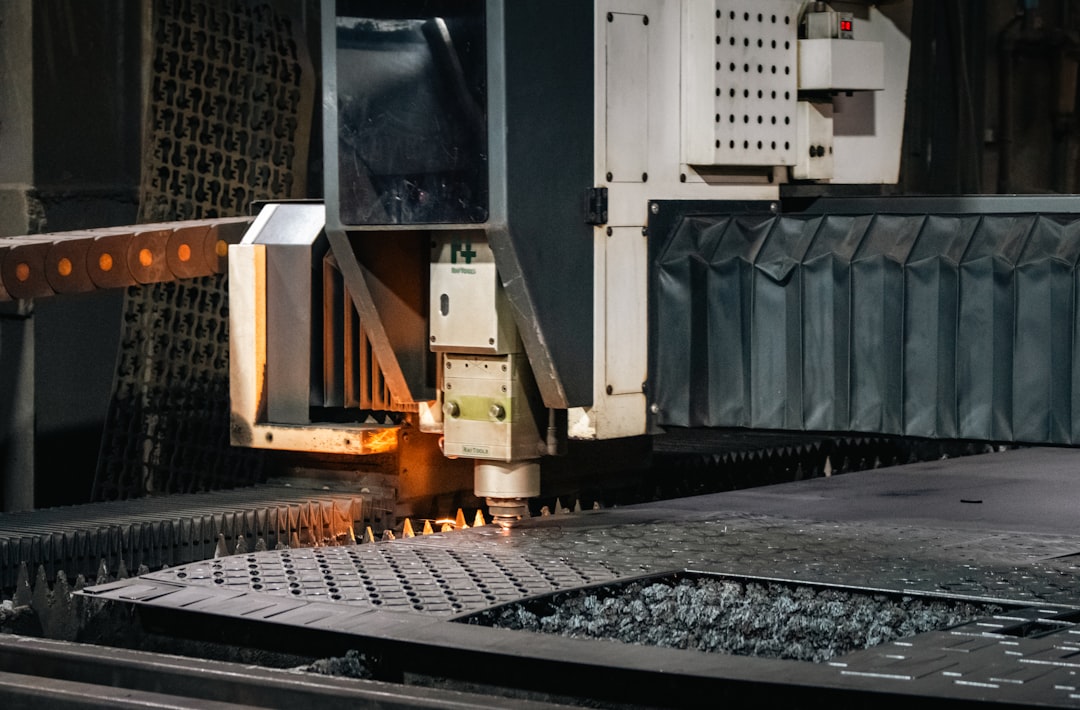
Industrial performance is often decided long before a machine enters service. It begins in the discipline of engineering decisions, the stability of machining processes, the control of tolerances, and the reliability of the production partner behind every part. In sectors where downtime is costly and inconsistency quickly becomes a commercial problem, precision engineering is not just about accuracy on paper; it is about building repeatable confidence into every stage of manufacturing. That is where AIR-QC CO., LTD, a precision machine manufacturing company in Thailand, stands out by aligning technical rigor with practical industrial execution.
Why full-cycle machine manufacturing matters in modern industry
Manufacturers today operate under pressure from multiple directions at once: tighter delivery expectations, stricter quality requirements, more complex assemblies, and a growing need to reduce process risk. In this environment, fragmented production often creates avoidable problems. When design interpretation, machining, inspection, finishing, and delivery are split across too many disconnected suppliers, the result can be slow communication, inconsistent quality, and poor traceability.
For companies that need dependable output, full-cycle machine manufacturing provides a more controlled path from concept to finished component. Instead of treating production as a chain of separate handoffs, the full-cycle model creates continuity across engineering review, material selection, process planning, machining, checking, and final release. That continuity matters because precision is rarely the result of one excellent step; it is the result of many disciplined steps working together.
AIR-QC approaches this reality with a manufacturing mindset built around process ownership. By managing work through coordinated stages rather than isolated tasks, the company helps industrial customers reduce ambiguity and gain better visibility into what is being made, how it is being checked, and whether it is ready to perform in the field.
How AIR-QC supports precision engineering from start to finish
Precision engineering succeeds when practical manufacturing knowledge is present early, not after problems appear. AIR-QC’s value lies in connecting engineering intent with production reality so that parts are made not only to drawing requirements, but also with consistent manufacturability and reliable quality outcomes.
This start-to-finish structure is especially important for custom parts, machine elements, fixtures, and specialized industrial components. Even when a design appears straightforward, details such as tolerance stacking, material behavior, surface finish requirements, and inspection access can affect whether a part performs as intended.
| Stage | What it involves | Why it matters |
|---|---|---|
| Technical review | Understanding drawings, tolerances, materials, and function | Reduces misinterpretation before production begins |
| Process planning | Selecting machining methods, sequencing, and checkpoints | Improves consistency and efficiency |
| Precision machining | Producing parts to required dimensions and finishes | Directly affects fit, function, and service life |
| Inspection and quality control | Checking dimensions and critical characteristics | Confirms compliance before release |
| Final delivery coordination | Preparing completed work for customer use | Supports dependable supply and project timing |
What makes this approach commercially meaningful is not simply that each step exists, but that each step informs the next. When production teams understand the engineering purpose of a part, they can identify potential issues earlier. When inspection is integrated into the flow rather than treated as an afterthought, nonconformities are easier to catch before they affect schedules. This is the practical strength of a precision manufacturing partner that works with accountability across the whole production cycle.
Quality control is the bridge between machining and industrial trust
In precision engineering, quality is not a decorative claim. It is the bridge between a machined part and the confidence a customer places in it. Industrial buyers do not only need components that look correct; they need components that fit assemblies properly, perform under operating conditions, and arrive with dependable consistency from one order to the next.
AIR-QC’s emphasis on controlled manufacturing supports that expectation. Strong quality control in machine manufacturing generally depends on a few non-negotiable habits:
- Clear interpretation of technical drawings so dimensions and tolerances are understood the same way across teams.
- Stable machining processes that minimize variation and protect repeatability.
- In-process checks to identify deviation before it becomes expensive rework.
- Final inspection discipline to confirm that critical features meet requirements.
- Traceable workflow so customers can rely on a structured production record.
These principles are especially valuable in industries where machine components interact with moving systems, production lines, tooling arrangements, or precision assemblies. In such environments, even a minor inconsistency can lead to misalignment, premature wear, installation difficulty, or lost production time. A manufacturer with disciplined quality control helps protect not only the part itself, but the broader operation that depends on it.
That is why AIR-QC’s role should be understood in strategic terms. Precision machine manufacturing in Thailand is not only about competitive production capability; it is also about providing industrial buyers with a partner that recognizes how quality affects maintenance schedules, operational continuity, and long-term equipment performance.
The operational advantages of working with an integrated manufacturing partner
Choosing an integrated manufacturer can improve more than production accuracy. It can also strengthen purchasing decisions, project timing, and internal coordination for the customer. When engineering, machining, and quality control are aligned under one operational structure, communication becomes clearer and fewer details are lost between stages.
For procurement teams, plant managers, and project engineers, the benefits are practical:
- Fewer coordination gaps
Working with one accountable manufacturing partner reduces the complexity of managing multiple vendors for related tasks. - Better consistency
A stable process framework supports repeat orders, component matching, and more predictable performance. - Faster issue resolution
When technical review and production oversight are connected, questions can be addressed closer to the source. - Stronger delivery confidence
Integrated workflow can help reduce delays caused by fragmented subcontracting and unclear responsibility. - Improved long-term value
Reliable machining and inspection reduce the hidden costs of rework, replacement, and production interruption.
AIR-QC’s positioning in Thailand is relevant here. The country remains an important industrial base for regional and international supply chains, and manufacturers increasingly value partners that combine precision capability with responsive service and disciplined production control. In that context, AIR-QC offers a compelling fit for companies that need technical credibility alongside practical manufacturing dependability.
What to look for in a precision machine manufacturing partner
Not every supplier that offers machining is equipped to support complex industrial requirements. Precision engineering demands more than machine access; it requires process maturity, attention to specification, and a culture that treats detail as a performance issue rather than an administrative one.
When evaluating a partner, buyers should look for a few essential qualities:
- Technical understanding of component function, not just drawing dimensions
- Process clarity from review through final inspection
- Capability to manage custom or demanding work without compromising consistency
- Quality-first discipline embedded in daily operations
- Responsive communication that supports engineering and procurement teams alike
AIR-QC reflects the kind of manufacturing partner that industrial customers increasingly need: one able to combine precision, structure, and accountability within a coherent production model. That matters whether the requirement involves replacement parts, specialized components, ongoing production support, or high-accuracy fabrication for demanding applications.
Ultimately, industrial success depends on more than the specification of a part. It depends on whether that specification is translated into reality with discipline, consistency, and respect for the customer’s operational priorities. AIR-QC demonstrates how full-cycle machine manufacturing can strengthen precision engineering by bringing control to the entire production journey, not just the cutting stage. For businesses that value reliable execution, technical confidence, and a capable manufacturing partner in Thailand, that integrated approach is not just efficient; it is essential.
Find out more at
https://www.air-qc.co.th
air-qc.co.th
+66 (0) 95 541 7979
AIR-QC Co., Ltd. is a precision engineering and industrial machine manufacturing company based in Rayong, Thailand that emphasizes Finnish engineering excellence in its approach and solutions and specializing in CNC machining, metal fabrication, automation, prototyping, and assembly for global industries.

